
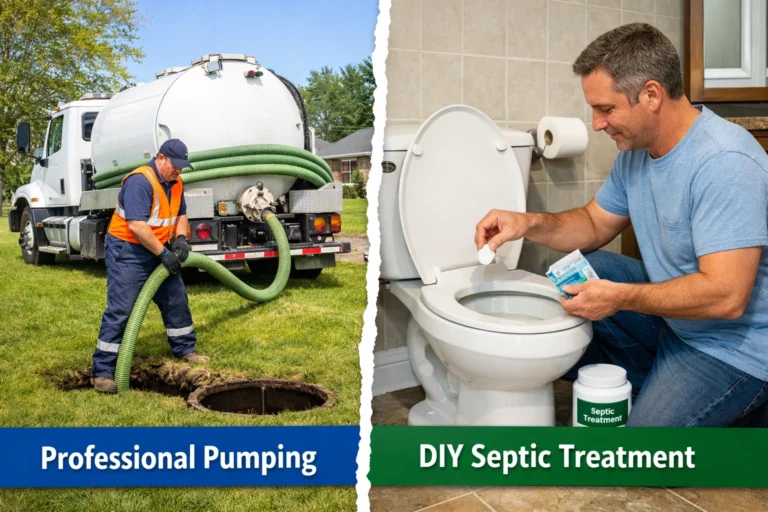
Septic tank treatments and septic pumping serve different purposes. Pumping removes accumulated sludge and solids from the tank, while treatments support bacterial breakdown of organic waste between services. Florida homeowners typically need regular pumping every 2 to 5 years, even if they use septic tank treatments for maintenance.
What Is the Difference Between Septic Pumping and Treatments?
If you own a home with a septic system in Florida, you’ve likely heard two common recommendations:
“Pump your septic tank regularly,” and “Use a septic tank treatment.”
But many homeowners wonder:
Do septic tank treatments really work?
Can treatments replace pumping?
Which option is better for Florida septic systems?
This guide explains the difference between septic tank pumping and septic treatments, when each is needed, and how Florida homeowners can use both correctly.
What Is Septic Tank Pumping?
Septic tank pumping is a professional service that removes accumulated sludge and scum from the septic tank.
What Pumping Does:
Removes solid waste buildup
Prevents overflow into the drain field
Reduces risk of backups and system failure
What Pumping Does NOT Do:
It does not improve bacterial balance
It does not prevent future sludge buildup
It does not fix underlying usage habits
Pumping is mandatory maintenance, not a performance solution.
What Are Septic Tank Treatments?
Septic tank treatments are products designed to support the natural biological processes inside the septic tank.
Most treatments contain:
Beneficial bacteria
Enzymes that help break down organic waste
Their goal is to:
Improve waste breakdown
Reduce sludge accumulation rate
Minimize odors
Support system efficiency between pumpings
Treatments are considered preventative maintenance, not replacements for pumping.
Septic Treatments vs Pumping: Key Differences
| Feature | Septic Pumping | Septic Treatments |
|---|---|---|
| Purpose | Remove sludge | Support waste breakdown |
| Frequency | Every 2–5 years | Monthly or ongoing |
| DIY or Professional | Professional only | Homeowner-applied |
| Cost | $250–$600 per service | Lower ongoing cost |
| Replaces the other? | ❌ No | ❌ No |
Bottom line: They serve different roles.
Can Septic Tank Treatments Replace Pumping?
No. Septic tank treatments cannot replace pumping.
Even the best treatments:
Do not remove inorganic solids
Cannot eliminate all sludge
Cannot fix severely neglected systems
However, treatments can help reduce how quickly sludge builds up, which may:
Extend time between pumpings
Improve system performance
Reduce odor issues
Why This Matters More in Florida
Florida septic systems face unique challenges:
Sandy Soil
Allows wastewater to move quickly, increasing the risk of solids reaching the drain field.
High Water Table
Limits system capacity and increases stress during heavy rain.
Warm Climate
Speeds up biological activity — both good and bad.
Because of these conditions, preventative septic care is especially important in Florida.
When Septic Pumping Is Absolutely Necessary
You should schedule pumping if:
It has been 2–5 years since last service
You notice slow drains or backups
Sludge levels are high
Your system has not been maintained
Treatments should never delay required pumping.
When Septic Treatments Can Be Helpful
Septic treatments may be useful when:
Your system is functioning but needs support
You want to reduce odors
You want to slow sludge accumulation
You use a lot of water
You want to support bacteria after pumping
They are most effective as part of a routine maintenance plan.
Are Septic Treatments Safe for Florida Homes?
Not all treatments are equal.
Florida homeowners should avoid:
Harsh chemical additives
Acid-based cleaners
Products that claim to “eliminate pumping”
Safer treatments typically:
Use bacteria and enzymes
Avoid caustic chemicals
Support natural septic processes
👉 This is why many homeowners research specific products carefully. You can see how one option works in this detailed Septifix review.
Cost Comparison: Pumping vs Treatments
| Expense | Typical Cost |
|---|---|
| Septic Pumping | $250–$600 every few years |
| Septic Treatments | Lower ongoing monthly cost |
Using treatments does not eliminate pumping costs, but it may help prevent emergency repairs.
Common Myths About Septic Treatments
❌ “Treatments replace pumping”
False. Pumping is always required.
❌ “All treatments are the same”
False. Ingredients and quality vary widely.
❌ “Treatments work instantly”
False. Biological processes take time.
Best Practice for Florida Homeowners
The most effective septic care approach combines:
✔ Regular pumping
✔ Water conservation
✔ Proper usage habits
✔ Preventative maintenance between pumpings
This balanced approach offers the best protection for Florida septic systems.
Key Takeaways
Septic pumping and treatments serve different purposes
Pumping removes sludge; treatments support bacteria
Treatments cannot replace pumping
Florida conditions increase the value of preventative care
Using both correctly helps protect septic systems
Septic Tank Treatments vs Pumping
❓ Frequently Asked Questions About Septic Pumping and Treatments
Q: Can septic tank treatments replace pumping?
A: No. Septic tank treatments cannot replace pumping. Pumping is required to remove accumulated sludge, while treatments only support waste breakdown between pumpings.
Q: Do septic tank treatments actually work?
A: Septic tank treatments can help support bacterial activity and improve organic waste breakdown when used correctly, but results vary by product and system condition.
Q: Is septic pumping required even if I use treatments?
A: Yes. Even when treatments are used, septic tanks must still be pumped regularly to prevent solids from damaging the drain field.
Q: Which is better for Florida septic systems: pumping or treatments?
A: Neither replaces the other. Florida homeowners get the best results by combining regular pumping with preventative septic tank maintenance, including proper usage habits and optional treatments.
Q: Are septic tank treatments safe for Florida homes?
A: Biological septic treatments that use bacteria and enzymes are generally safer than chemical additives, especially in Florida’s soil and groundwater conditions.
Q: How often should septic treatments be used?
A: Many septic tank treatments are designed for monthly use, but homeowners should always follow the manufacturer’s instructions.
Final Thoughts
Choosing between septic tank pumping and septic treatments isn’t an either-or decision. Florida homeowners get the best results when they understand what each option does and use them appropriately.
Educated maintenance decisions protect your septic system, reduce long-term costs, and help avoid unpleasant surprises.